




"1000 O" is experimental cinema - Review
In "1000 O", everything is experimental, right up to the title. I would like to clarify that experimental cinema is neither good nor bad, does not have to entertain us and does not even require us to understand it. It’s related to conceptual art, in the sense that it probably needs an explanation for us to understand. But it meets a fundamental question, it always enters unexplored territory, which sometimes we think does not lead anywhere. But that is impossible, there is nothing that goes nowhere.
Once I wrote a story about Cotard’s syndrome (I’m sure almost no one knows what it is), and I felt comfortable doubting my own existence, although I don’t know if that doubt made the text experimental. That’s not enough.
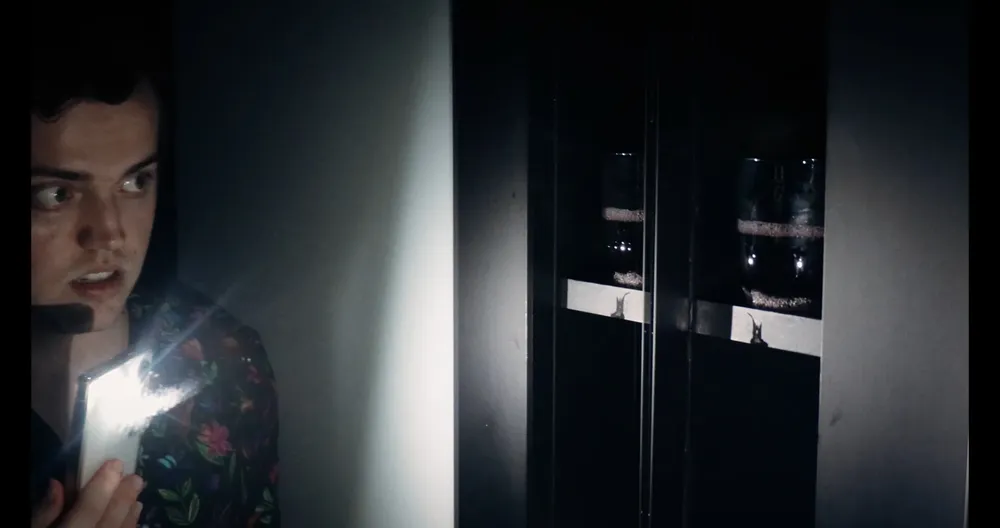
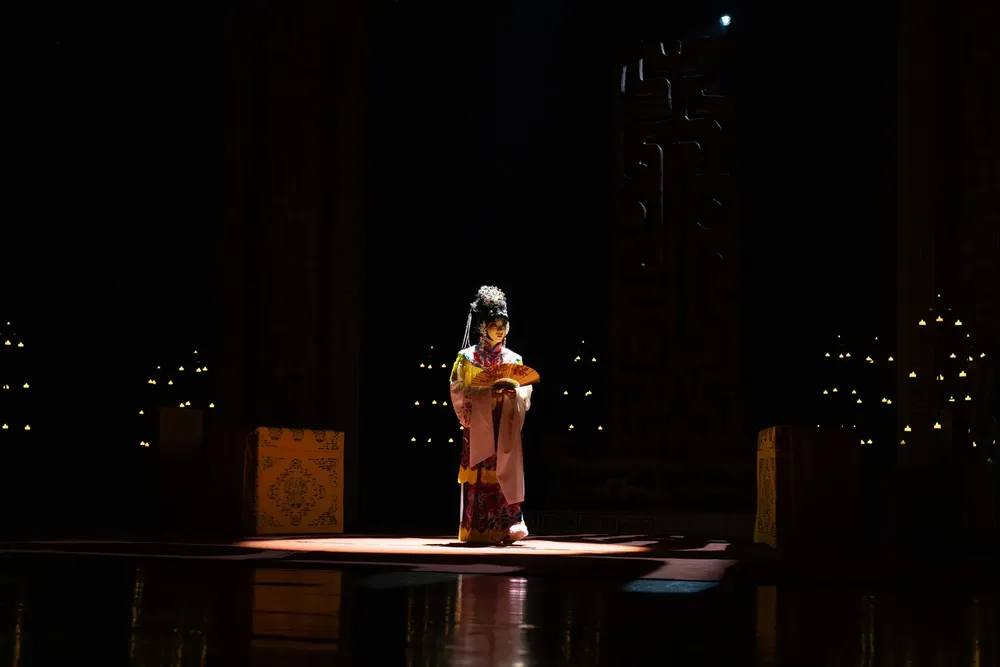
An artificial umbilical cord is inflated into cartoon bubbles with the embryonic thoughts of a fetus. In English with text embedded in French, German, Italian or Spanish. That’s the story of "1000 O". And that, in 7 minutes, It was enough to match me with Barbara Peikert, their director...
Peikert, is a Swiss filmmaker and visual artist, who has a great fondness for the fictional world. Began It was enough to match me with Barbara Peikert, their director... producing experimental films at French universities with master’s degrees in visual arts and aesthetics in Paris 1+8, at the Sapienza in Rome, in Lighting Design and specialized in the CRM Research Centre for Music and Sound Technology in Italy.
It has projected its audacities in the Chinese Theater of Los Angeles (USA), surely disturbing to Hollywood. She has a filmography too extensive for her age that I do not know, but it does not look much. She explains herself like this.
"1000 O" explores the boundaries between perception and imagination, and how, in many cases today, reality overtakes fiction and this becomes reality.
The navel and umbilical cord are the parts that embody and the core of the protagonist. They are present in the background to create an approximation of the fictional main character. Snacks transform the scenes into an interior perspective. When I look at my navel, I do not feel any physical dependence; my feelings are no longer there. The idea evokes the food in the amniotic sacs and the belly that belongs to the navel.
The navel and umbilical cord emphasize the natural dependence between the unborn child and the adult, as if they were extended eternally and everywhere, not only for the first necessities until birth. Humans care about what protects and nourishes them, and their lives oscillate between the anxiety of castration and loving satisfaction, distrustful of eternal reminders of the thirst for food and glorifying automatic feeding. The pain and misery of the human being can be reconnected and reinterpreted again and again, offering us a variety of emotions about origins and separations.
The poem came from a piano concert where the piano strings sounded as if played by an harpist. Baraba-pe kept in his mind a vivid image that recalls the legendary story of "1000+1 nights", where stories are gathered in connected frames: each string surrounds sound messages and the idea of the poem 1000 O. O as "ombelichi" (navel in Italian) arises.
The "1000" sandblasters contribute to the most poetic sound associated with the vibration of sea and land, and could be part of the previous experimental film, Waveswaterwall, from 2023.
It is better to see it than to understand it, for aesthetics, at least, do not require understanding.
Te puede interesar



Lo más visto