




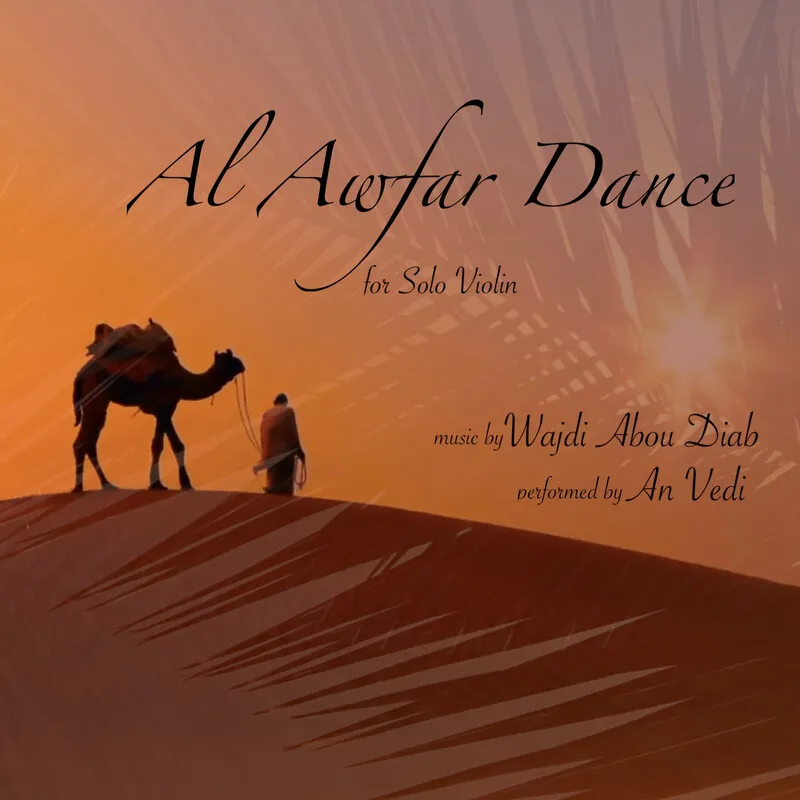
"The Awfar Dance" is a short film of almost 10 minutes, which was presented at the Festival de Música en Cine held in Buenos Aires, Argentina, this month of December. His images of camels crossing the Sahara, almost like shadows, led me to recall the films of Lotte Reiniger, who a hundred years ago made in wartime Germany. Let’s say, the Weimar period. It was a wonderful shadow cinema that no one continued after it, as far as my knowledge goes.
Its director, Wajdi Samir Abou Diab, takes us on a journey that perhaps represents the search for paradise lost or illusory, in the metaphor of a caravan that ceaselessly pursues a mirage. This visual representation is accompanied by a violin solo, which is "The Awfar Dance" - Opus 13D, a piece inspired by traditional Arabic music and rhythm. It is performed by An Vedi and is characterized by Arabic scales such as "Bayati" and "Rast", and rhythmic patterns inspired by the 19/4 rhythm cycle entitled "Al Awfar", accented by different expressive techniques on the violin. The piece begins with a slow and melancholy character that represents the relentless struggle to find something that may never be found. As it progresses, the music intensifies, representing the increasing urgency and despair of the caravan in its search.
Towards the end, the music reaches a climax that represents the caravan’s last frantic attempt to reach the oasis. But the sound fades abruptly, conveying the tragic realization that what they were looking for was nothing more than a mirage. The piece ends recalling elements from the first bars, closing the circle of the endless search.
Al Awfar Dance is an evocative piece that explores the universal theme of human desire and ambition, as well as the price we often pay for chasing them.
Wajdi Samir Abou Diab, from Lebanon, draws inspiration from his dual cultural background: Arabic classical music and western music. Born in 1991 and graduated from the National Higher Conservatory of Music of Lebanon (LNHCM) with diplomas in Piano and Musical Composition. His personal experience and love for Levantine Arab music culture and Western classical music led him to write his own unique music, evoking the musical history of the Arab Mashreq.
Te puede interesar






Lo más visto