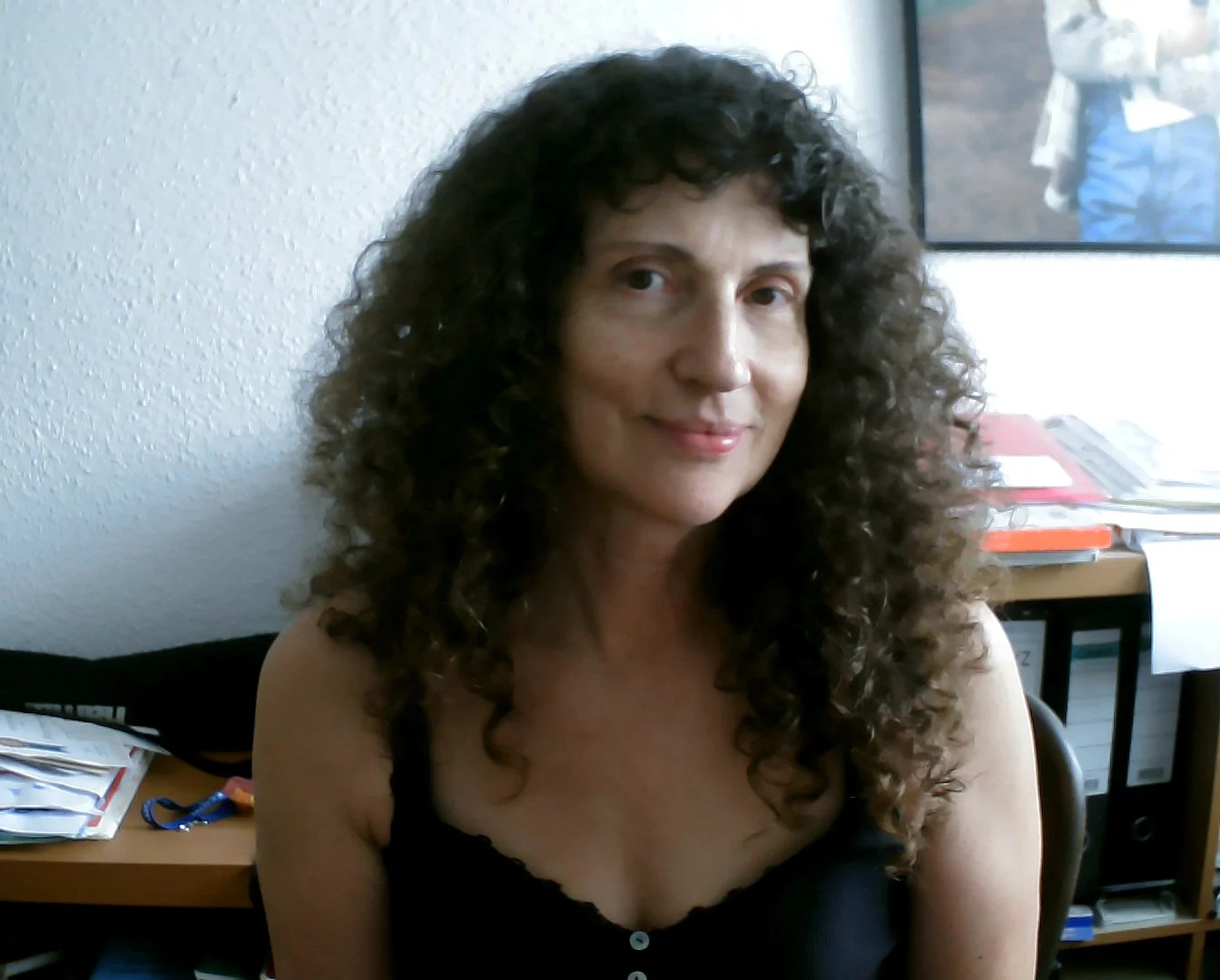



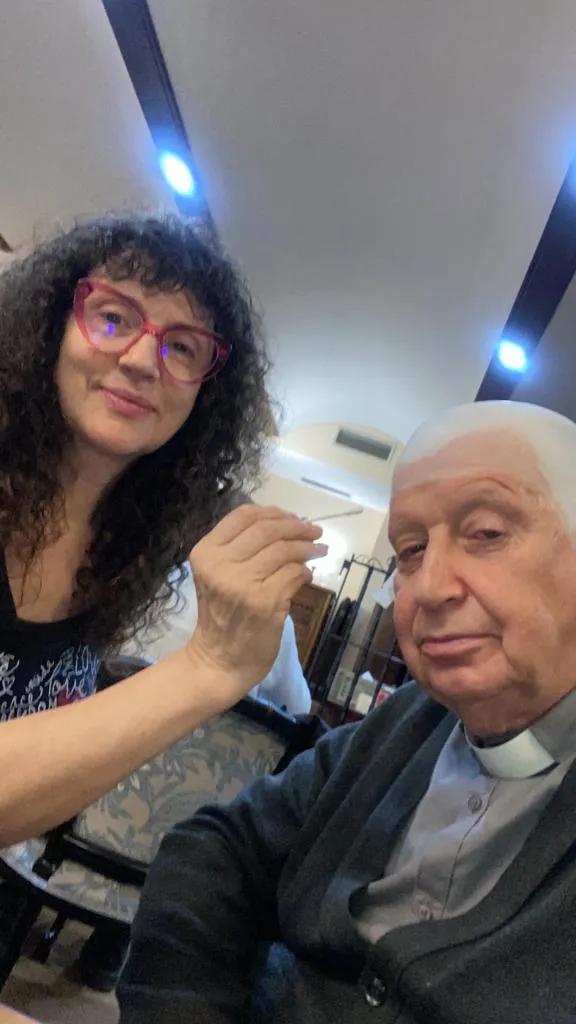
"Minateda. A treasure in the sun", one of the last titles by director Marta Ferreras, is perhaps the most difficult and risky. Marta recounts that a friend said to her:
"Are you crazy! Are you going to make a historical feature film by yourself and without money? You remind me of that postman who was determined to build a cathedral!"
That postman existed, and built his cathedral with his hands, collecting stones from the field, although he needed a lifetime to do so. The cathedral, zero-cost architecture, is still standing, and it’s rare, chaotic, atypical. It has a strange magic.
"Minateda" has not taken a lifetime, but more than two years of work. Marta Ferreras has taken over, as in her shorts, not only the direction and production, but also the script, editing, sound recording, photography and camera.
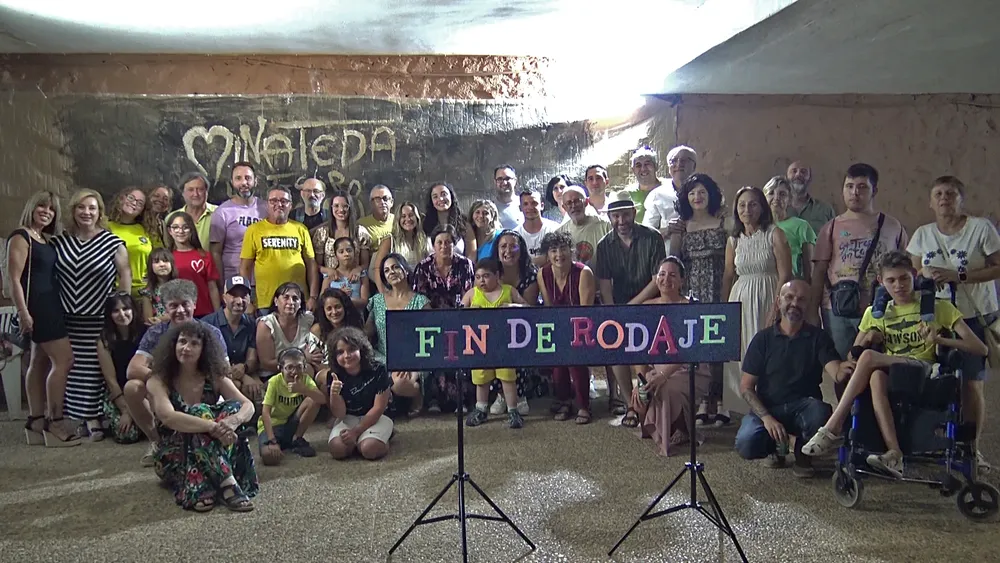
However, as reported by the local press and stated by herself, it has not been a solitary work, but a great achievement of collective involvement, since it has had the collaboration of an entire people. The neighbors of the area collaborated by lending technical material, antique objects, houses and other places of filming; sewing, combing, helping with documentation, composing music, fixing sound...
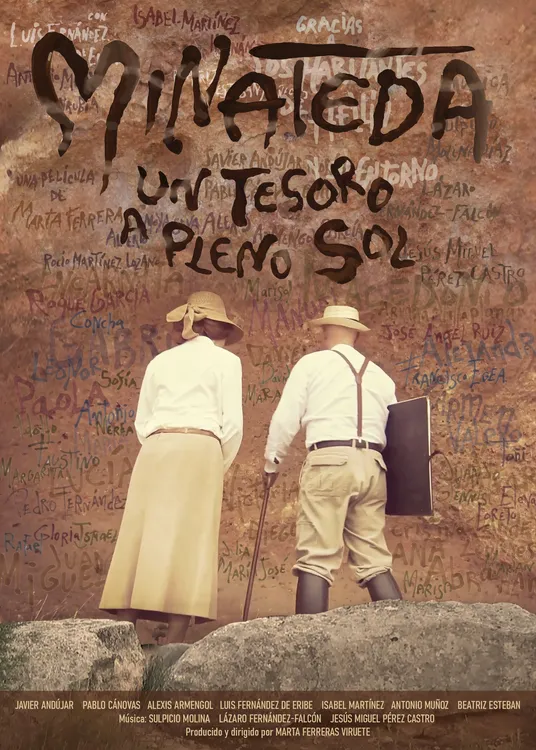
Filming took place in and around Hellín, with the participation of hundreds of neighbors as amateur actors, although also participated some veteran actor, such as Luis Fernández de Eribe, who debuted in his youth in "El bueno, el feo y el malo". It was an intermittent shoot, with some scenes shot during post-production. A work carried out without prior strategy, which has been growing and changing like a living organism, mixing phases, improvising and welcoming sudden proposals.
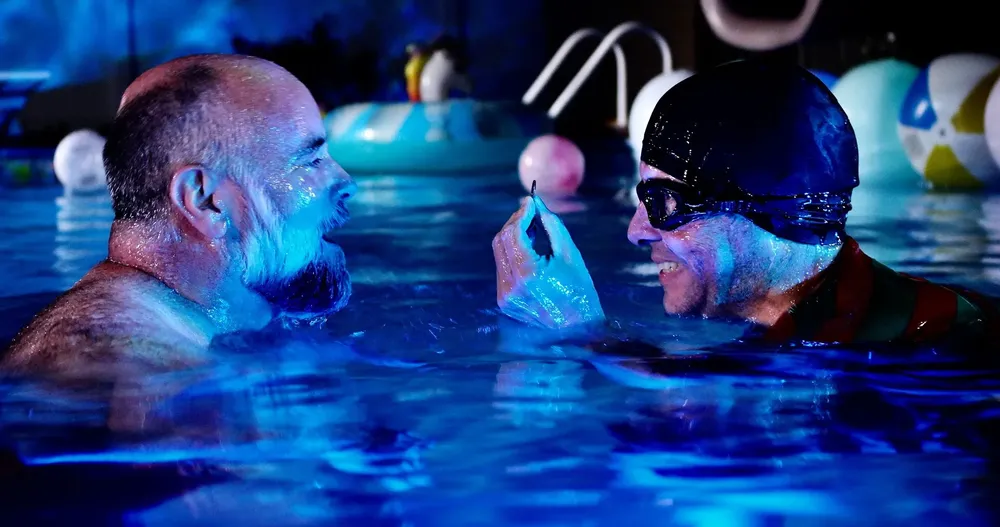
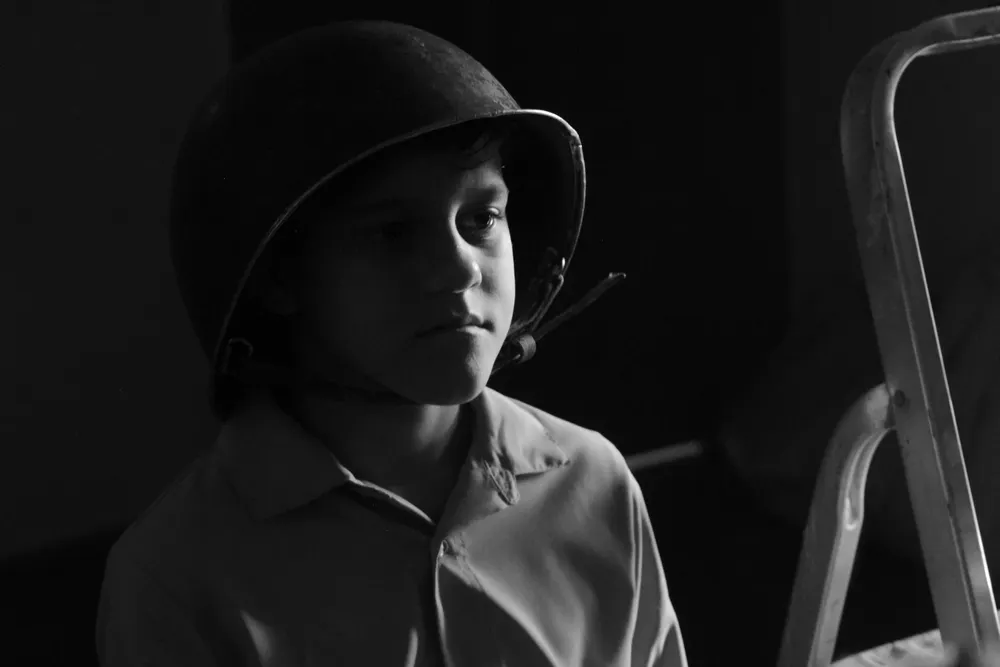
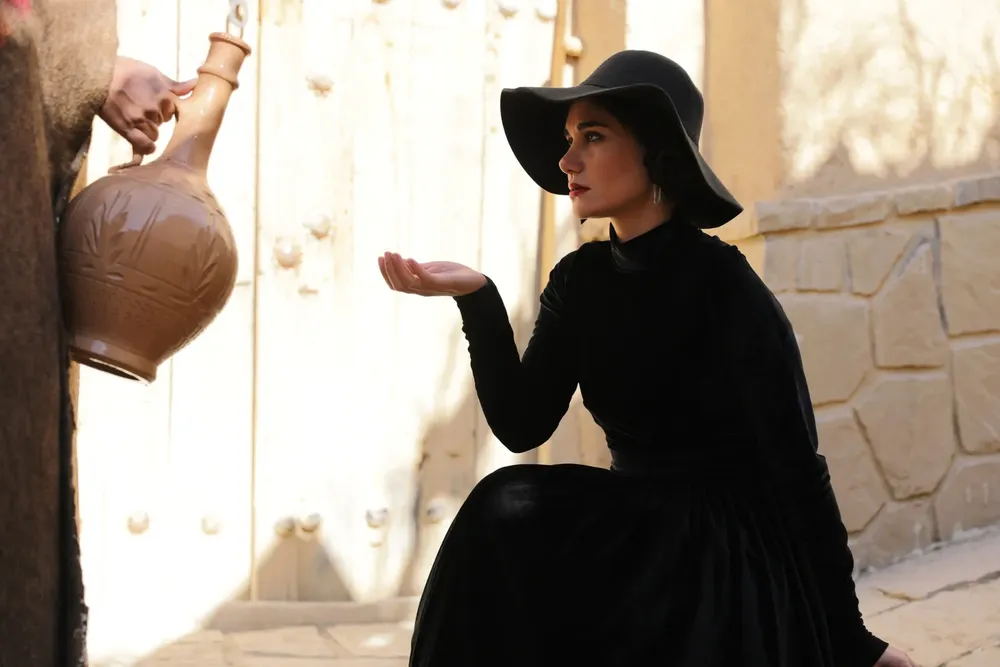
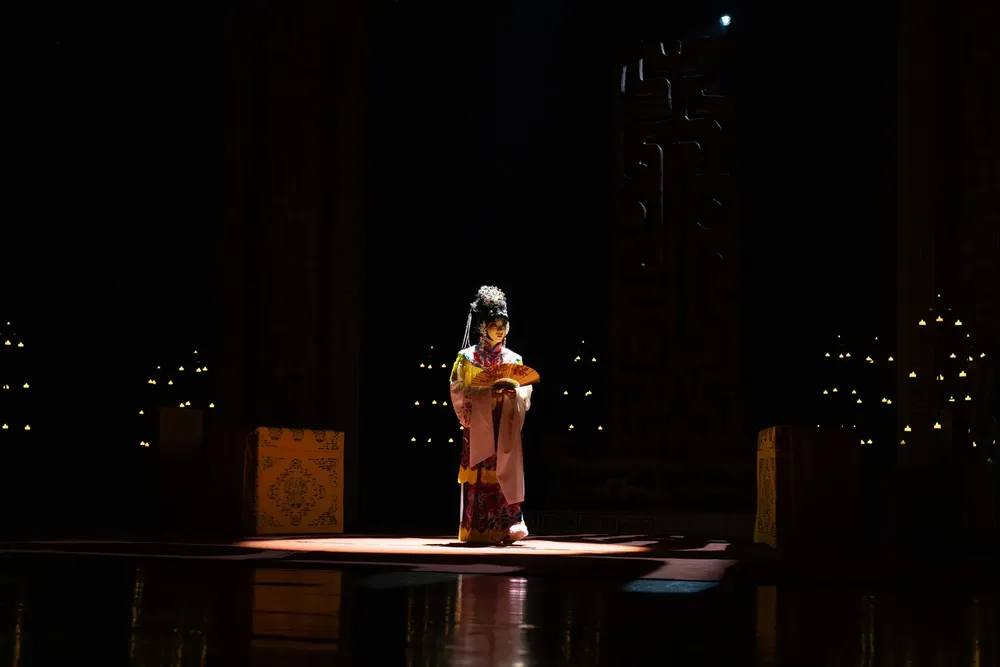
The film tells the story of the discovery of cave paintings in Minateda, Spain. Within a documentary structure, most of the story is told through dramatised scenes, so that the result is a mixture of historical fiction, biopic and documentary. Throughout the narrative, some of the most important pre-historians of all time appear, with particular interest in the history of the French abbot Henri Breuil and his secretary Mary Boyle, an archaeologist almost forgotten today.
The incredible experience has given rise to a strange documentary, far removed from conventional norms, so that at the premiere, with large audience attendance, there were very opposing opinions.
The film combines color and black and white, and makes a journey throughout the entire twentieth century, with the peculiarity of adapting the style of cinema to each era, in a nod to the whole history of cinema. A very personal work, conceived as pure artistic expression of the author. But, at the same time, a collective work, born of the involvement and solidarity of an entire people: Hellín.
Te puede interesar


Lo más visto