



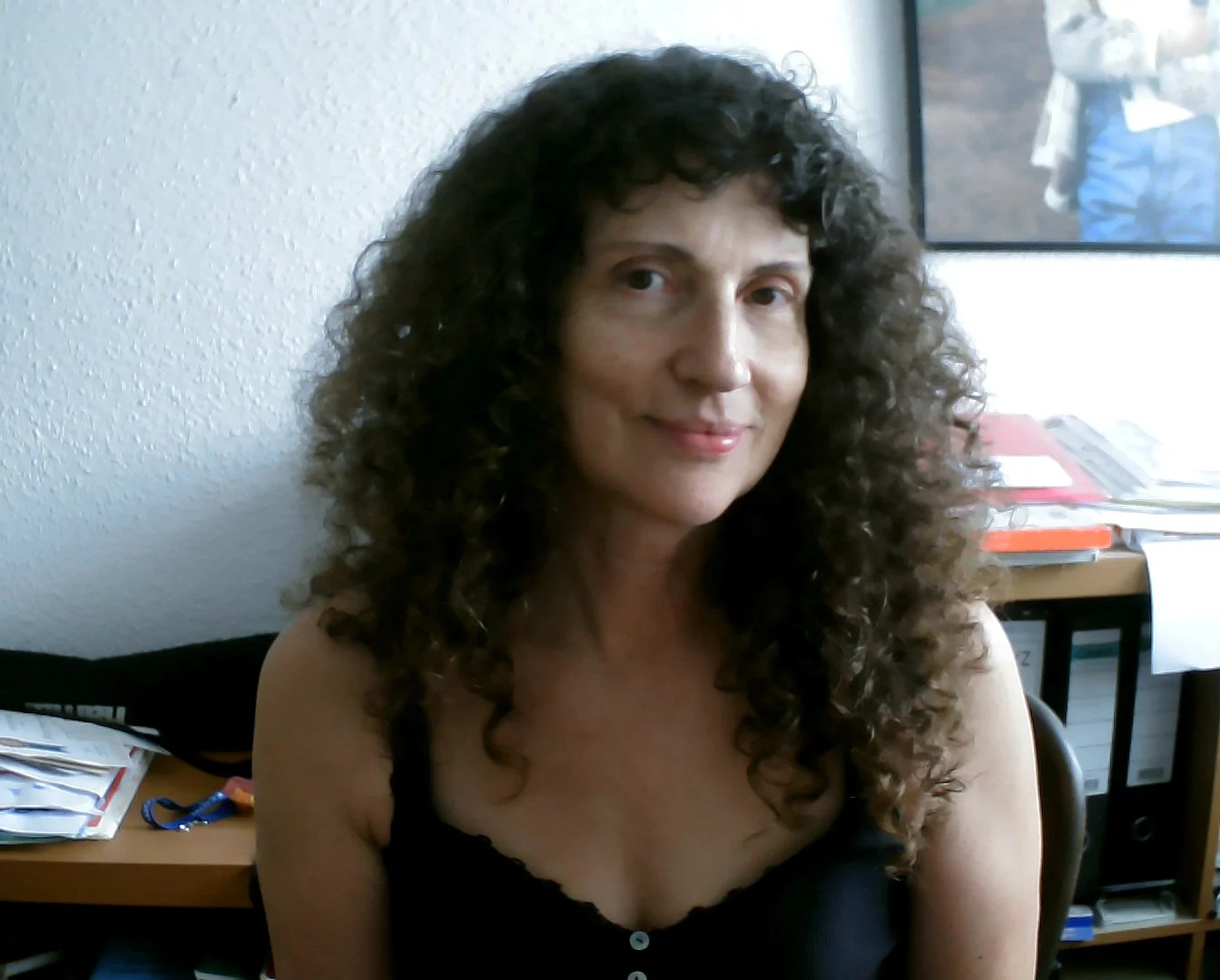
- Are you interested in cinema as an educational tool?
Cinema has great transformative power, for good and for ill. To take a negative example, I am concerned about the degree of sadism in cinema today. Looking for movies on a platform you can find varied content. But if a person just turns on the TV (for example, in Spain), during peak viewing hours, the experience gives much to think about the human condition. Some days, switching from one channel to another in search of films, invariably appear American productions brimming with beatings, rapes, tortures, cut fingers, tables of dissections, tripas, absolutely morbid murders... I wonder if the producers make these films because the public loves sadism, or the public loves sadism because they have gotten used to it.
Of course, all issues can be addressed, but the feeling, most of the time, is that all this waste of violence is simply meant to sell. And, from a purely artistic point of view, I think that ellipsis produces more mystery than the disgusting details so explicit in today’s cinema.
On the opposite side, cinema can convey positive values. But, even if a film may have that intention, I think the fundamental thing is the artistic experience. I see cinema as an end in itself, not a means to something else. I often say, with regard to many of my shorts, that I do them to contribute to the respect of people with disabilities. And it’s true, but on top of that, I do them to make art. When I write a script, I get carried away and end up going down unexpected paths for myself. I have some short that is clearly educational, with an obvious "moral", like "Long and Round," which is a short against bullying. But other shorts have a slightly absurd, or ambiguous, narrative that is open to different interpretations, such as "The Talking Dolls Bazaar". They don’t pretend to direct the public to any particular conclusion. But I am very careful not to release harmful content.
- Did you study film?
No. I studied Fine Arts in Salamanca, specifically drawing, painting, sculpture, engraving, illustration and photography. Strange as it may seem, I didn’t choose audiovisual.
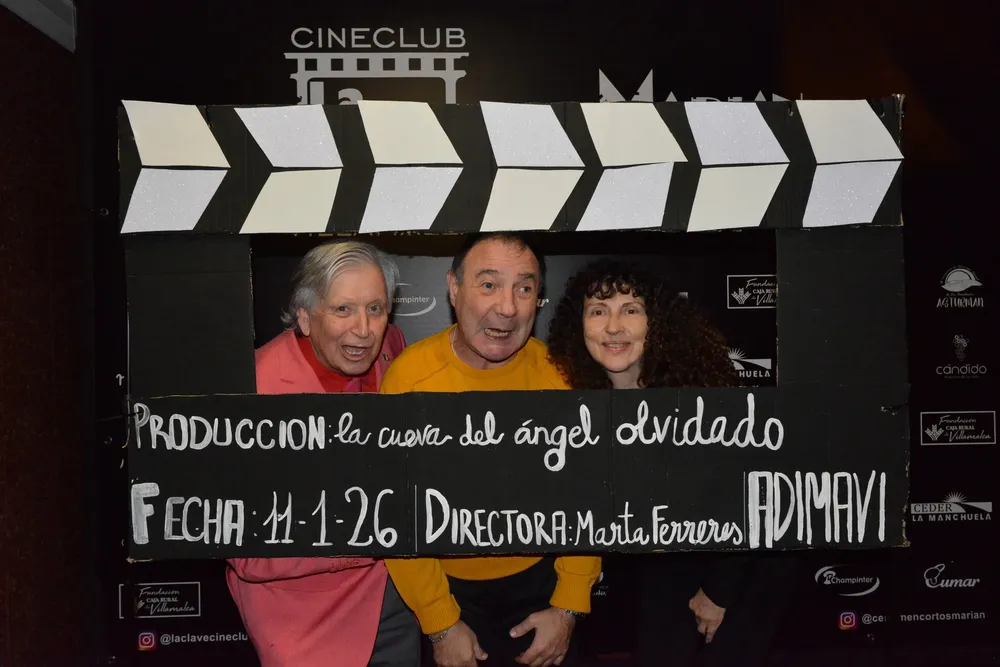
- What was your first foray into cinema?
Despite not having studied film, I always dreamed of being a filmmaker as a child. But I also had a vocation as a painter. When my son, a severely disabled child, was born, I offered to teach a painting workshop at his special ed school. At the end of the course I organized an exhibition and it occurred to me to make a short video with pictures of the paintings, almost all of fish. So I thought it would be good to get these fish moving and started doing tests with a setup program, starting from scratch, because I didn’t know how to use it. That first attempt was a bit of a dud. My second trip to the cinema was "A very chulito paparito", in 2011, a very naive animation short film, made with poor image and sound quality, done with students of the school, which received two honorable mentions. The third was "Night landscape", also made without means, which, despite technical shortcomings, won ten awards at national and international festivals.
- When you are at festivals, in which category do you most often register your films? - Do you have any ongoing projects?
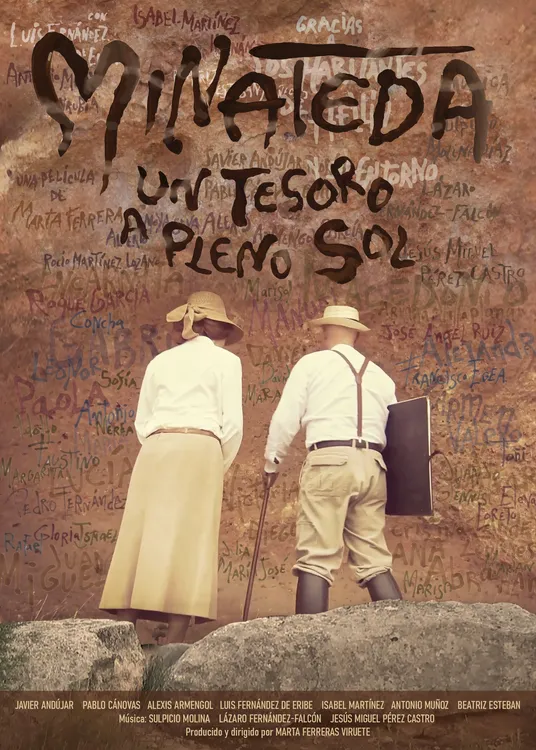
Depends on the short. I have participated in animation, children and youth, educational, environmental, disability and inclusion festivals... And sometimes, in festivals without specific theme. I recently made a feature film entitled "Minateda." A treasure in full sun", different from the above, of historical theme. I premiered it in Hellín in November 2025, and so far I have not presented it at many festivals because it has taken me a long time to register intellectual property, due to the number of bureaucratic obstacles that exist in the world of cinema. I have at the moment a project, still not quite completed, which would also be of historical theme.
- Are you interested in cinema as art, industry or entertainment?
As art, mainly. As entertainment too, but many films conceived as pure entertainment bore me. For example, movies with endless fights or hundreds of cars crashing and jumping in the air.
Cinema as an industry has aspects that I don’t like. The power of money means that the international film scene is monopolized by the US. The other countries, even if they have good directors, are overshadowed, hidden. I have nothing against American cinema, when it is conceived as art: but, in a very high percentage, fierce competitiveness, the belief that the quality of a work is measured by economic success, give rise to films with impressive media and impeccable technical realization, but empty of content, put at the service of money, not expressiveness.
- How do you get funding?...
I only applied for a grant once because, as I say, the red tape is unbearable: it’s hard to focus on artistic creation and fill out documents at the same time. Once I funded a short film through a crowfunding campaign. I have made some shorts in the context of practical film workshops, dedicating money and time from the workshop to making a short, so I haven’t earned money, but I haven’t lost it either.
What I usually do is to make up for the lack of economic means with imagination and many hours of work, looking for alternative ways of narrating. The scripts, the montages, the sets I do myself. And also, above all, I am immensely fortunate to have the support of many people who work with me selflessly. I always spend some money, but not much because I don’t have it. The success of these projects is due more to will and cooperation than money.
- Do you see cinema as a definitive profession or as a stage in your life?...
I don’t see it as a profession, because I don’t make a living from it, which, on the other hand, allows me more creative freedom. It is a vocation, which I combine with the vocation for painting. I don’t think I will ever abandon either one.
- Do you recognize influences in your work?
Of course. I don’t follow any director, but I learn from everyone. I prefer poetic, naïve, experimental, rare works that mix genres, more contemplation or reflection than action. I love simple special effects, archaic, with overlays, chroma; the mix of real image and drawings; the obvious sets; silent cinema in general, black-and-white cinema, surrealist or symbolic cinema, realistic everyday life cinema (directors of the Nouvelle Vague). As a child and teenager, I was impressed by films like "Mary Poppins" by Robet Stevenson, "Chitty Chitty Bang Bang" by Ken Hughes, "Metropolis" by Fritz Lang, "Doctor Caligari’s Cabinet" by Robert Wiene, "The Exterminating Angel" by Buñuel, "Cabiria’s Nights" by Fellini...
- I see you have studied fine arts and painting and teaching. Tell me how you break up with so much activity.
I do not engage in formal education, as my son needs constant attention. I give workshops by the hour in different schools and entities, at this time in the association AFADAFO. I have a YouTube channel called "Paint with Marta" where I teach painting and drawing techniques. Sometimes I make murals or portraits. Some seasons I have dedicated myself to organizing activities for children, in small villages. There was a long time in my life when I lived by making portraits on the street, in the Ramblas of Barcelona. It’s true that I do many different things at once, in a rather disorderly way, I couldn’t say where I get my time from. I think I only sleep a few hours.
- You have a very extensive filmography. What has given you the most satisfaction?
All my films, short or long, make me feel both satisfied and unsatisfied. Every new project is a challenge in which I try to do something different, not repeat myself. I usually have a hard time, I always find technical difficulties, combined with problems in daily life, that make me think that I will not succeed. When I finally see the finished play, I feel a lot of happiness, but at the same time, I think I should have done better. Perhaps the most beautiful thing of all is feeling accompanied in these projects by people who matter to me and with whom I love working.
Te puede interesar
Singara Mohan, Director of Kaalamega Karigindhi. - Interview
John Dolter
INTERVIEWS21 de diciembre de 2025
INTERVIEW WITH ED PORTER, DIRECTOR OF "THE FOOD THAT FUELS"
Gustavo Coletti
INTERVIEWS09 de diciembre de 2024
Interview with Oscar Adán López Parres, director of "Who is God".
Gustavo Coletti
INTERVIEWS30 de junio de 2024
Lo más visto
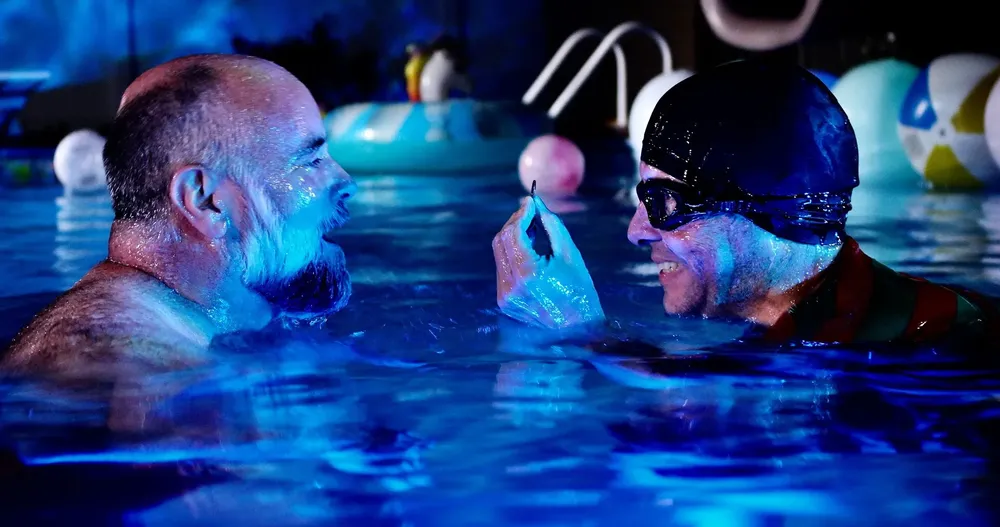
"The super honeymoon of Fred Demmler and Alexander James" - Review
John Colbert
REVIEWS17 de enero de 2026