



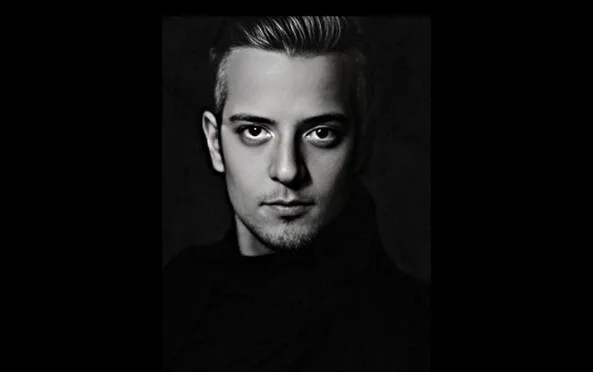
This is an interview with film director Mohammad Abedi from the Islamic Republic of Iran, who directed "Tremolo," a documentary about mental patients.
An Iranian novelist, screenwriter and children’s activist, he is also a professor of Western philosophy and Persian literature.
1. Are you interested in the relevance of music in cinema?
For me, music in cinema is not merely decorative or emotional; it is a dimension of time. Music can give meaning to silence and transform an image into memory. Just as music and poetry carry collective memory in our culture, in cinema, music can reveal the hidden soul of the image.
2. Did you study film?
Yes. I studied Theater at university in Tehran, Iran. This education provided me with language and structure, yet my cinematic path has always extended beyond academic frameworks.
3. What was your first foray into cinema?
My first film was All the Eyes, a documentary about Baluchistan, Iran. This experience was not only my entry into cinema but also a profound encounter with reality, perception, and the responsibility of the image.
4. Are you interested in cinema as art, industry, or entertainment?
For me, cinema is above all a tool for seeing, representing, and reflecting the world. It is a way to approach reality, not necessarily to explain it—a means for observation and contemplation.
5. In which category does your film intervene at this festival?
My film is presented in a category where music and image are inseparable. Music in this work does not accompany the image; it is its co-existence, an element that suspends the narrative and gives it depth.
6. Do you have projects in progress?
I have recently completed my new film, Twilight of the Oak, and currently have no specific cinematic project in progress. Perhaps I will consider writing a new play next.
7. Do you recognize influences in your work?
No filmmaker is shaped in isolation. I am influenced by cinema that respects time and trusts the viewer. Additionally, Persian literature, poetry, and the everyday life of this land have profoundly shaped my perspective.
8. How do you get financing?
Financing independent cinema is always challenging. I usually rely on a combination of personal investment and creative collaborations. Limitations often become part of the language of the film.
9. Do you see cinema as a definitive profession or only occasionally venture?
I do not see anything in this world as permanent. Nevertheless, my passion since childhood has been literature and cinema—and this interest, regardless of professional or occasional engagement, has always remained with me.
10. What is your concept of cinema that interests you?
Cinema that listens to narratives rather than speaking; cinema that allows the viewer to pause within the image and discover meaning for themselves.
Te puede interesar



Lo más visto